November 16, 2010

Introduction to Computational Genomics: A Case Studies Approach

Where did SARS come from? Have we inherited genes from Neanderthals? How do plants use their internal clock? The genomic revolution in biology enables us to answer such questions. But the revolution would have been impossible without the support of powerful computational and statistical methods that enable us to exploit genomic data. Many universities are introducing courses to train the next generation of bioinformaticians: biologists fluent in mathematics and computer science, and data analysts familiar with biology. This readable and entertaining book, based on successful taught courses, provides a roadmap to navigate entry to this field. It guides the reader through key achievements of bioinformatics, using a hands-on approach. Statistical sequence analysis, sequence alignment, hidden Markov models, gene and motif finding and more, are introduced in a rigorous yet accessible way. A companion website provides the reader with Matlab-related software tools for reproducing the steps demonstrated in the book.

Download

Megaupload

Mathematics of Evolution and Phylogeny

This book considers evolution at different scales: sequences, genes, gene families, organelles, genomes and species. The focus is on the mathematical and computational tools and concepts, which form an essential basis of evolutionary studies, indicate their limitations, and give them orientation. Recent years have witnessed rapid progress in this area, with models and methods becoming more realistic, powerful, and complex.

This book of contributed chapters is authored by renowned scientists and covers recent results in the highly topical area of mathematics in evolution and phylogeny. Each chapter is a detailed overview of a specific topic, from the underlying concepts to the latest results.

Aimed at graduates and researchers in phylogenetics, this book will be of interest to both mathematicians and biologists.
Features

* High quality contributions from renowned scientists
* Covers the latest in evolution and phylogenetics
* Much needed introductory material on phylogenetics aimed at biologists and mathematicians

DOWNLOAD .

mEGAUPLOAD1
mEGAUPLOAD2


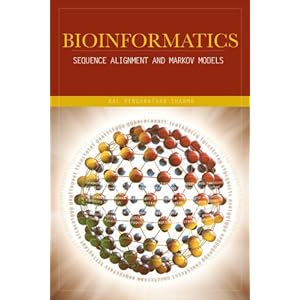
Bioinformatics: Sequence Alignment and Markov Models

Bioinformatics showcases the latest developments in the field along with all the foundational information you'll need. It provides in-depth coverage of a wide range of autoimmune disorders and detailed analyses of suffix trees, plus late-breaking advances regarding biochips and genomes.

Featuring helpful gene-finding algorithms, Bioinformatics offers key information on sequence alignment, HMMs, HMM applications, protein secondary structure, microarray techniques, and drug discovery and development. Helpful diagrams accompany mathematical equations throughout, and exercises appear at the end of each chapter to facilitate self-evaluation.

This thorough, up-to-date resource features:

* Worked-out problems illustrating concepts and models
* End-of-chapter exercises for self-evaluation
* Material based on student feedback
* Illustrations that clarify difficult math problems
* A list of bioinformatics-related websites

Bioinformatics covers:

* Sequence representation and alignment
* Hidden Markov models
* Applications of HMMs
* Gene finding
* Protein secondary structure prediction
* Microarray techniques
* Drug discovery and development
* Internet resources and public domain databases

Downloads

Megaupload

ANCESTRAL SEQUENCE RECONSTRUCTION

Ancestral sequence reconstruction is a technique of growing importance in molecular biology and comparative genomics. As a powerful technique for both testing evolutionary and ecological hypotheses as well as uncovering the link between sequence and molecular phenotype, there are potential applications in a number of fields. Beginning with a historical overview of the field including apllications, the discussion then moves into potential applications in drug discovery and the pharmaceutical industry. A section on computational methodology provides a detailed discussion on available methods for reconstructing ancestral sequences, including advantages,disadvantages, and potential pitfalls. Purely computational applications, including whole proteome reconstruction are discussed. Another section provides a detailed discussion on taking computationally reconstructed sequences and synthesizing them in the laboratory, while the last section describes scientific questions where experimental ancestral sequence reconstruction coupled to a computaional and experimental how-to guide, while simultaneously addressing some of the hot topics in the field.

Publisher: Oxford University Press, USA; 1 edition (July 26, 2007), 272 Pages

Download
Megaupload

Mathematics of Genetic Diversity
J. F. C. Kingman


CBMS-NSF Regional Conference Series in Applied Mathematics 34

This book draws together some mathematical ideas that are useful in population genetics, concentrating on a few aspects which are both biologically relevant and mathematically interesting.

Contents

The Problem: Why Mathematics?; Genes and Their Inheritance, Selection, Mutation; Survival of the Fittest: Balanced Polymorphisms, Multi-Locus Selection, Balance Between Selection and Mutation, The House of Cards, The Diploid House of Cards, The Resistance of Polymorphisms to Mutation; The Neutral Alternative: Evolution in the Absence of Selection, A General Model for Mutation in Finite Populations, The Random Walk Case, The Frequency Spectrum, The Ewens Sampling Formula, The Poisson-Dirichlet Distribution, Partition Structures, Testing Neutrality; Selection in Finite Populations: Deleterious Mutants, The Wright-Fisher Model, Wright's Formula, The Infinite Alleles Limit.

Download Links
Megaupload